Grooming Your Dog - Get the Hair
Out of Your Eyes!
When I think of grooming your dog at home (or mine for that matter), this is what comes to mind... So many choices! Millions of brushes and combs, clippers and scissors, rake or slicker, brushing teeth or not, herbal shampoo, oatmeal shampoo, flea and tick repellent shampoo... you get the idea.
It's easier to choose which dog grooming supplies to purchase when you know what your pooch really needs.
This is what you've been looking for - all that information on dog grooming tools and techniques, all in one place! Whether you're a first time owner or you've had your dog for years, this is a great place to find info and recommendations from a canine professional.
Grooming your dog doesn't have to be a tedious, get-it-done-and-over-with task. It can become a special time of bonding between you and your pooch. He'll soon enjoy the extra attention, and you'll enjoy having a clean dog around.
Some breeds may not require much more than a quick brushing, while other breeds will need you to spend more time on their long coats.
Regularly grooming your dog will give you the opportunity to check for any abnormal changes to his coat or skin, and therefore a head's up on any health problems.
Puppies
Getting a puppy used to grooming is very important. Even though longer-haired breeds won't need professional clipping or anything until their adult coat comes in sometime around 7 to 9 months old, you definitely want to brush them regularly so that they become accustomed to being handle like that.
When you first get your puppy, start by keeping sessions short and sweet. Before using any tool on the pup, let him sniff it, and praise him while he is doing so.
Next, begin brushing him gently, constantly praising him for accepting it. If the pup tries to bite at it, say "EH!" in a sharp, firm voice. After a few seconds, release the puppy and lavish praise on him for being good while you brushed him. Always make grooming your dog a happy experience and they will learn to love it.
Tools Of the Trade
Here are a list of the dog grooming tools you will need for the job at home:
Nail clippers - they come in two styles: guillotine (left photo) and pliers (right photo). I recommend the pliers style, as they never require sharpening and seem to work the best.
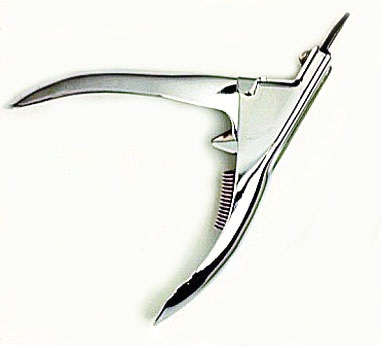
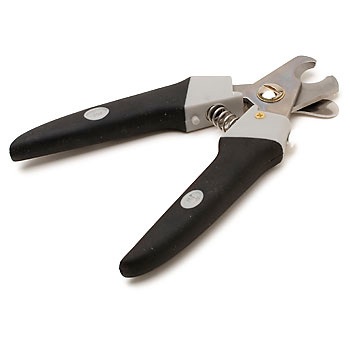
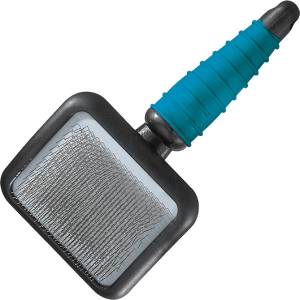
Slicker brush - this is one of the two brushes that you can survive with for grooming your dog.
It works great for almost all breeds that have a thicker coat or undercoat, as well as longer haired breeds. I use one of these on my Cockapoo, Milo, along with a wide-toothed comb (see below).
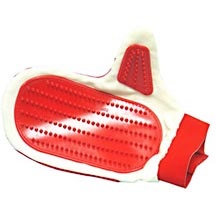
Rubber curry mitt - this is for shorter coats, such as a Boxer or Dalmation. As their fur is not very long, a slicker brush can be uncomfortable for them.
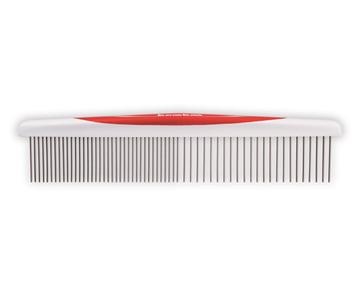
Wide-toothed comb - this comb is good for finding any leftover mats and tangles (pictured to the right). It should be used after brushing with a slicker brush.
Blunt-tipped scissors - these are used for keeping the hair or fur growing between the pads on his feet clipped evenly with the pads, and also for trimming long haired breeds faces.
Make-up pads - use these instead of cotton balls for cleaning out your puppy or dog's ears.
Dog tooth brush - many different kinds available, just choose one that works for you and your dog.
Brushing Your Dog
Brushing should happen every day. Why?
- Bonding with your pet.
- It will help control the amount of loose hair in your home.
- Helps to keep your dog's coat free of dirt.
- Prevents tangles from turning into larger mats!
For dogs with regular fur, first check your dog for mats before brushing, and work them out with your fingers or your comb. To brush fur, first brush it the way it grows naturally. Then very gently brush it backwards, against the grain you could say. This helps to get rid of dead hair underneath the coat. Next, brush it the correct way once again. Finish off the dog and pick up loose hair with a sticky roller or pantyhose held in your hand.
For long haired breeds, start by brushing with a slicker brush. Go over it afterwards with a wide-toothed comb to check all over for any mats or tangles you've missed. You can spray any tangles you come across with a good detangling spray, and then work at them gently with your brush again.
Hair grows constantly, so breeds with hair instead of fur require haircuts. Unless you're up to the task, leave clipping to the professional dog groomers.
The best commercial shampoo we've found is Mane & Tail (yes, for horses!). As a general rule, don't bathe a dog with fur more than once a month or you'll dry the coat and skin out. If he gets muddy, just hose him off with warm water.
Mixing an egg with your dog's food occasionally will keep his coat nice and shiny! Make sure there are no mats or tangles in his coat before you bathe, or they will only become worse! So brush, then bathe. Also, rinse out the shampoo completely from his coat to avoid itchy skin.
Ticks? Sometimes you may come across a tick while grooming your dog. Grab a pair of tweezers or a Tick Key to slowly but firmly pull it out. Always be sure to get the head out of your dog as well as the body of the tick!
Itchy Dog?
Try putting hemp or fish oil from health food stores in their food, as they are both great for a dog's skin. If you can see little black specks on your pet's belly, it is a sure sign of fleas. Consult your vet, or try this homemade flea shampoo remedy: 1 cup of Palm Olive or Ivory (liquid) soap and 4 cups of water.
Very often, if fleas is not the culprit, your dog might have allergies (a common dog health problem). This could be allergies to certain foods, or to something in the environment, such as grass, pollen, dust, certain materials, or even flea bites.
My dog, Justice, had several allergies... red meats, as well as environmental (that flared up at certain times of the year). Before we realized this, she would sometimes scratch herself so much that she would bleed! Poor girl.
If you suspect your dog has food allergies, I highly recommend a raw dog food diet. We saw so much improvement in Justice's overall health and coat condition. There are many benefits, including healthier teeth and gums, glossy coat, healthy skin, smaller and less stinky poops, and better overall health.
Grooming Your Dog - Nail Care
Grooming your dog should be a fairly regular thing. Clip his nails once a week. Why?
- It will condition your dog to the process, and...
- The quick relieves itself once a week. The quick is the vein in the toenail.
Puppies under 8 weeks of age need to be socialized to having its paws and nails touched and clipped, so do it often.
Don't depend on self-trimming by cement, etc. Only cut off the tip of the nail, on an angle. If you happen to cut the quick, it will bleed (like a stuck-pig actually!). Here a few things to use to stop the bleeding - Quick Klot, Blood Stop (pet stores sell this), Quick Stop, corn starch, baking soda, flour, sulfur shaving stick (septic pencil - drug stores), cane sugar, or unscented bar soap (rub it on the nail).
If you can hear your dog's nails clicking on the floor, they are too long! This puts the dog's weight on his nails, causing elbow, shoulder and spine damage. They should be about 3 mm above the floor. If your dog absolutely won't stay still for it, try:
- Distraction - one person can hold a Kong with peanut butter for the dog to lick while another person does the nails
- Rescue Remedy - use your finger to massage it into your dogs gums to help calm him down
- Gravol (under 20 lbs. - 1/2 children's chewable tablet, over 20 lbs. - 1 children's chewable)
- AtroVet (in extreme and last case scenario from your vet) - although I would probably first try taking my dog to a professional groomer, as dogs seem to be better behaved sometimes for a stranger!
Tooth Brushing?
You don't need to brush their teeth when grooming your dog, but if you'd like to, go ahead! Only use toothpaste made especially for dogs - they come in yummy chicken or beef flavors! Or you can simply use baking soda and water.
If your dog is fed a raw food diet, you will be regularly feeding him raw meaty bones. These will naturally clean your dog's teeth, and he will have pearly whites for years!
Ear Cleaning Basics
Along with grooming your dog is ear cleaning. Using make-up pads (they hold together better than cotton balls, and won't get stuck in the dog's ear), gently clean with peroxide first. Continue cleaning until the make-up pads come out clean. Then go over with mineral oil once a week, in a circular motion, otherwise the peroxide will dry the ear out.
If your dog's ears are smelly and black looking, he could have mites. Floppy ears are more apt to have problems because they don't dry out as easily. There should be no foul odor or any liquid in your dog's ear. If there are long hairs in your dog's ear, use your fingers to pluck them out so they can't cause an ear infection.
Now you are equipped with enough information on all the dog grooming supplies to get started with grooming your dog! Good luck!
You can also sign up for "The Yellow Hydrant", a monthly selection of doggie tips and techniques! Best part... it's totally free! To join the rest of the dog people, fill out the form below.
- Home
- Dog & Puppy Care
- Grooming
Want More Tips?
Subscribe to our free monthly e-zine, The Daily Fetch, to keep up-to-date on what's new here on Model Hound, get first dibs and discounts on new training e-books, plus extra training and care tips delivered directly to your inbox.
What's New


-
The Right Dog Training Collar for the Right Dog
Not all dog training collars are created equal. And not every collar is the best fit for every dog! Learn from a trainer how to pick the best, and why... -
It's Not About the Specific Words...
It really doesn't matter what language, word or signal you use. Dogs are smart, and will learn to follow whatever dog training commands you teach them! I came across a great example in the news of a g… -
Dog Behavior Changes With Age and How You Can Help
Just as with humans, it's normal to see some dog behavior changes with age. Learn what changes are common and how to help your senior pet in their golden years.