No More Puddles: Real Help for
House Training A Puppy
House training a puppy can feel like an absolute nightmare! If ever you've regretted the decision to buy a white living room rug, it's now.
Been there, done that. I had a white rug (still do!). And I had a puppy! AND my puppy had giardia. Please tell me I'm not the only one who is familiar with the diarrhea-inducing parasite!
Never-the-less,
we came through the other side of puppy potty training with our rug
intact, as well as our sanity. You can too!
If you're here, I'm going to assume that you are either getting ahead of the game and arming yourself with all the best house training tips, or you are dealing with some serious mess and need a life-line. Either way, I can help!
House training a puppy is much easier when you have a solid plan to follow. I've heard so many different ideas about how to tackle house training tossed about, that it can be confusing!
But as a certified dog trainer who has worked with hundreds of owners, I know what works, and what doesn't.
Roadmap to Success
There's only a few major steps to focus on:
- Prevention
- Teaching your puppy where to relieve himself
- Correcting and cleaning up accidents
I've trained my own pups successfully with this method of house training, and helped many other owners, too.
Oh, and if you'd rather have everything you'll need to know to get this
house training business under control in one place, just grab a copy of my e-book. Then you don't have to worry about losing this page or anything :)
The most important thing to remember when house training a puppy is to be consistent! Inconsistency is confusing for a dog, and leaves him guessing at what it is that you want him to do or not do.
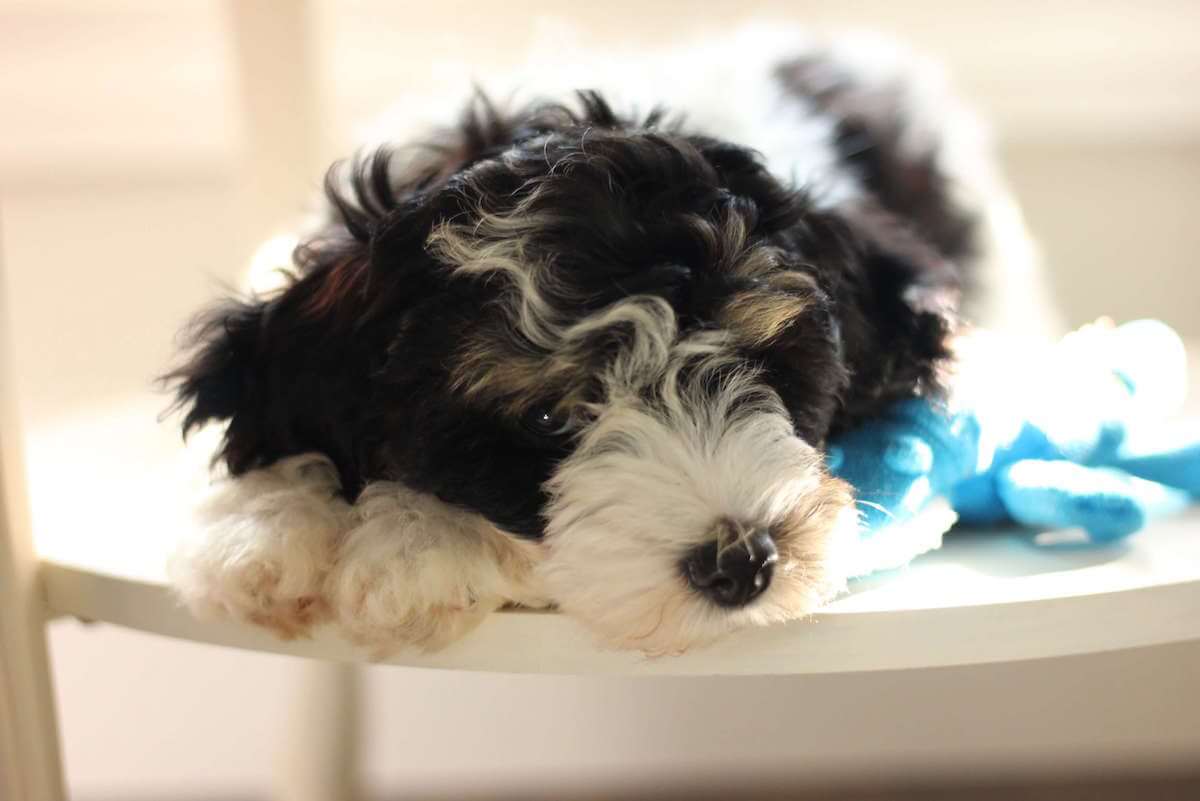 Our puppy, Milo, enjoying some crate-free time after a walk.
Preventing Puddles
So you just brought home a new puppy... while you will want to let the dog sniff around the house a bit, keep him on a leash.
Why? If he finds a nice spot in a secluded room or basement,
chances are he'll pee (or poop) there! By keeping the dog on a leash, you can be
sure of preventing this from happening.
You know the saying, "An ounce of prevention is worth a pound of cure"? The same goes for house training a puppy.
If you can prevent unwanted accidents, this stage will go by a lot quicker and easier. Once your puppy gets into a habit of peeing or pooping in the house (even once a day is considered a "habit"), it becomes that much harder to break.
A crate is going to be your best friend when it comes to preventing accidents from occurring while house training a puppy. Good thing for us, the majority of dogs and puppies won't soil where they need to sleep.
Now before you roll your eyes or click away from here, thinking that a crate is such an awful thing, hear me out!
Dogs are den creatures. They love a nice small cozy spot to curl up in, and a place that is their own. The only reason a dog will be resistant to being in a crate is if he was not properly conditioned to it (i.e. it was used as punishment, for "time-outs", or spends an unreasonable amount of time in it).
Done
the right way, your pooch will love its crate! It became a safe place
they can retreat to if things are getting too chaotic in the house
(kids, anyone?), during a scary storm, or whenever they want a cozy nap.
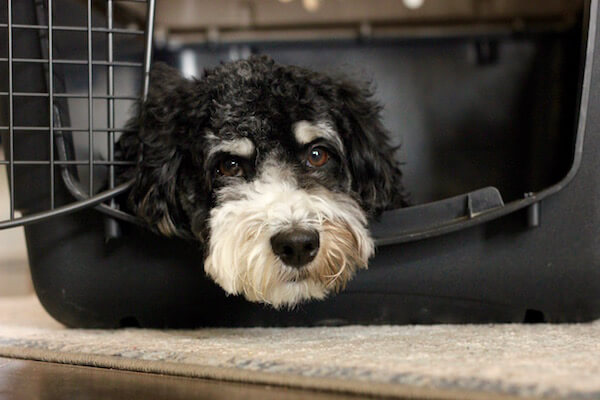 Using a crate is essential to house training.
Now that I've convinced you... crate train your puppy or dog right away. Don't wait a week or two to let him "settle in". Have a properly sized crate in a central room of the house before you even bring the pup home, where he can eventually stay for up to 8 hours a day.
Instead of giving free rein while house training a puppy, crate him when you go away and at any time that you can't have both eyes on him.
Same goes for at night. After a few weeks of taking your pup out once or twice during the night (set an alarm!), he should be able to go 7 or 8 hours without needing to empty his bladder.
Of course, the first thing you should do in the morning is take your dog or puppy outside to pee.
Take him out on a leash (yes, even on cold winter mornings...) so that you can be sure that he actually did his business, and you can train him to go in the same potty area each time.
Teaching Your Puppy to Go Outside
Now here's the hard part of house training a puppy - you'll need to take him out every hour, or more often if needed. Again, take him out on a leash, and always to the same spot (preferably on grass).
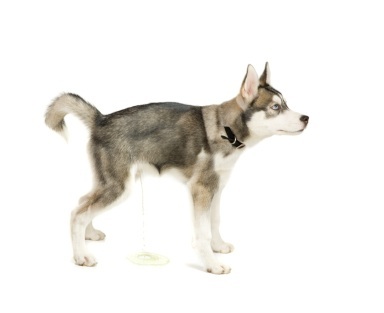 Don't scold when accidents
 happen while house training a puppy!
Once your pup pees or poops outside, praise immediately! If you wait until you're back inside before you give a treat, it will be too late and he won't understand that he's getting it for peeing, and not for coming in the house or sitting in front of you.
If you need to set a timer to remind yourself to take your puppy out, do it! Timers are my life savers. Otherwise there will be a puddle in the house...
Accidents When House Training a Puppy
Speaking of which...
What should you do if there's an accident while house training a puppy? First of all, don't panic.
If you can catch it on time, clap your hands loudly or say "eh!" to startle the pup in the midst of peeing/pooping. Then rush him outside. Don't ever scold the dog for going inside, or you will make him afraid to pee in front of you (think road trips...).
If you've missed this opportunity, take a clean sponge and sop up the pee or pick the poop up in a bag. Take the sponge/bag out with your puppy to the designated "bathroom area", and wipe it on the grass. Encourage him to sniff it - he needs to smell the pee/poo outside on the grass to understand it!
Inside, you'll also need to clean the area very well or he will repeat that behavior. Don't clean it with bleach, because the smell of ammonia will trigger your dog to go again in that spot.
Use an enzyme-based cleaner wherever needed (crate, bedding, kitchen floor, carpet). One great cleaner that I like is Odor-Out, available at Walmart and many pet stores.
What About Pee-pads or Paper-training?
Oh
blech. I am so grossed out by this type of potty training. I mean, we
don't teach our kids to do their business in the corner before
introducing them to the potty - why would we do that to our puppy?
The worst thing you can do is litter train, pee-pad train or paper train your puppy - he will really struggle with learning to go outside! Every rug or carpet in your house will become fair game as a spot to relieve himself.
If you want your puppy to do his business outside,
start training him to do so from the beginning!
Some puppies seem to "get it" quicker than others, but all dogs can be house trained! It might be a little harder once they've got a habit of peeing or pooping in the house, but with this plan, it shouldn't take longer than a couple weeks.
One caveat. Puppy mill pups. Our own Cockapoo, Milo, was from a rescue organization that took him from a puppy mill, and I can attest to the fact that it can sometimes take months to get consistency in house training when their start to life was on the chaotic side. We got there, it just took longer than is typical!
If you have an older dog that you are house training, it shouldn't take much longer. However, if your dog seems to be unable to hold it for very long, it may be an underlying health condition (such as urinary incontinence or a UTI). A quick visit to the vet can rule out any issues.
Want a detailed step-by-step guide for house training a puppy or older dog? Grab my e-book House Training Made Easy. It has my tried-and-tested method on house training for dogs, including crate training, marking behavior and much more.
I've put together all of my best house training and crate training how-to tips and advice in one simple e-book that will make your job a cinch!

House training a puppy or older dog to go outside can be frustrating, but this
guide is meant to take that stress away and turn it into an easy, stress-free
lesson. You can do this!
- Home
- Basic Training
- House Training
- Home
- Dog & Puppy Care
- House Training
- Home
- Behavior Challenges
- House Training

Want More Tips?
Subscribe to our free monthly e-zine, The Daily Fetch, to keep up-to-date on what's new here on Model Hound, get first dibs and discounts on new training e-books, plus extra training and care tips delivered directly to your inbox.
What's New


-
The Right Dog Training Collar for the Right Dog
Not all dog training collars are created equal. And not every collar is the best fit for every dog! Learn from a trainer how to pick the best, and why... -
It's Not About the Specific Words...
It really doesn't matter what language, word or signal you use. Dogs are smart, and will learn to follow whatever dog training commands you teach them! I came across a great example in the news of a g… -
Dog Behavior Changes With Age and How You Can Help
Just as with humans, it's normal to see some dog behavior changes with age. Learn what changes are common and how to help your senior pet in their golden years.